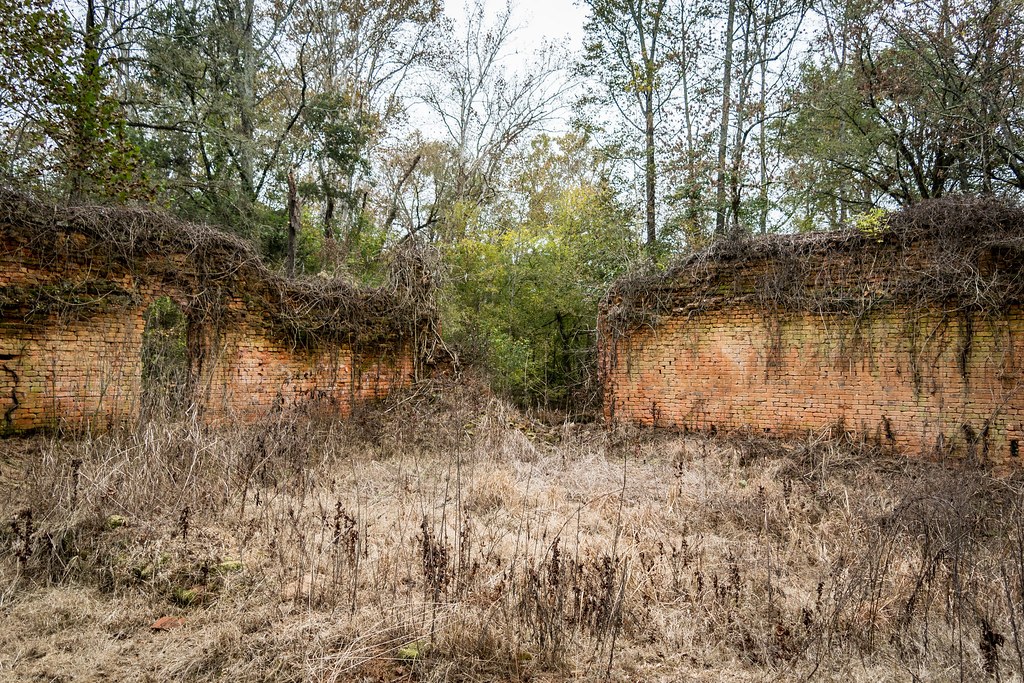
Mill ruins
The brick warehouse
Roofless walls and empty windows that once held cotton bound for Augusta and Savannah.
Learn moreIn the 1800s this Oconee River mill town was a place of work, family and promise. Today only brick walls remain, and its story is still being uncovered.
Preserve
Protecting brick, stone and stories.
Educate
Tours, talks and living history.
Inspire
Keeping a lost town in view.
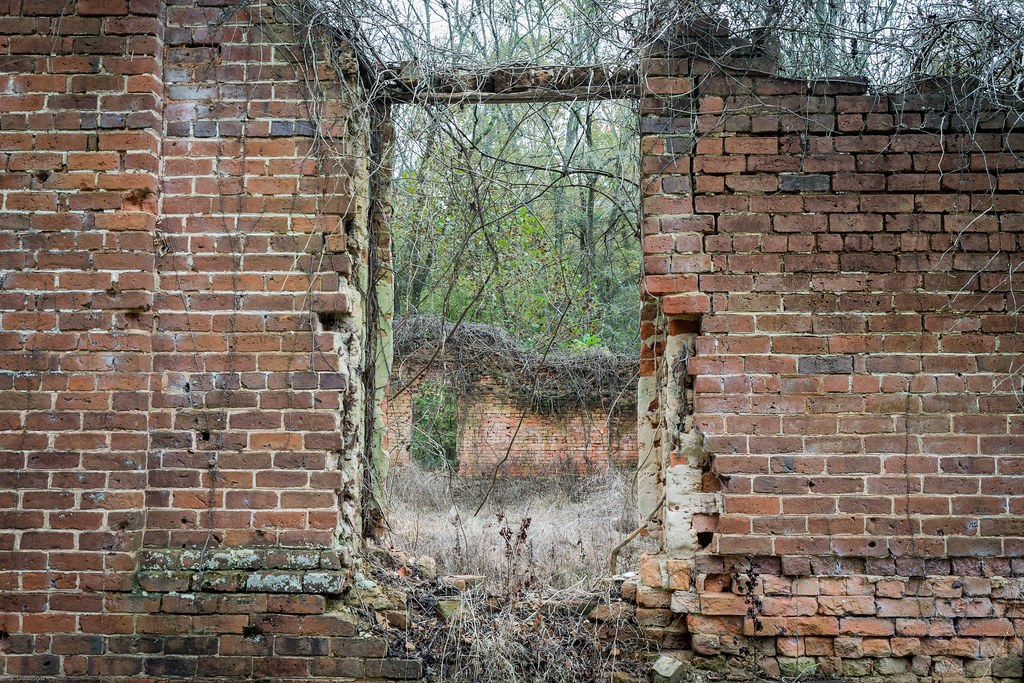
Real people.
Working hands.
A lasting story.
Mill ruins · Oconee National Forest
The village
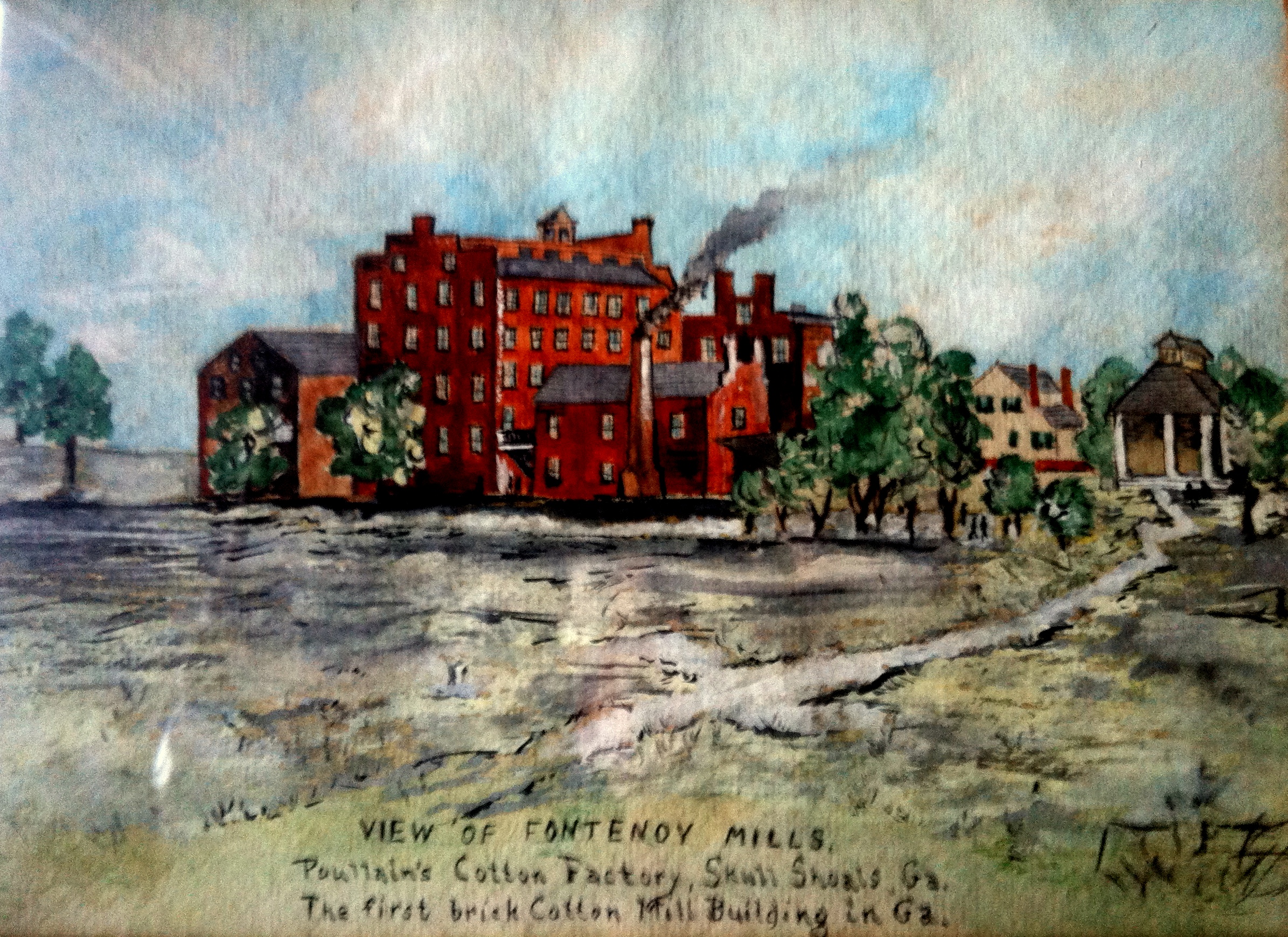
Scull Shoals grew where the Oconee River crosses a broad shelf of granite. For ten thousand years Native American hunters and farmers were drawn to the shoals. In the 1800s Georgia entrepreneurs dammed the water and built Georgia’s first paper mill, then a cotton factory, a warehouse, worker houses and a covered toll bridge.
The village survived drought, floods, a catastrophic fire and war. By the twentieth century the mills were silent, and the Oconee National Forest reclaimed the streets. What is left is a remarkably intact archaeological site, cared for by volunteers and Forest Service archaeologists.
Six moments
Two hundred years of enterprise, hardship and stubborn survival along the Oconee.
1784
Revolutionary War land grants bring hard-scrabble cattle and tobacco farmers to the Oconee border, behind log forts.
1793
After raids on the frontier, Lt. Cupp builds a log fort at the shoals. Archaeologists are still looking for its traces.
1811
Zachariah Sims advertises for rags and turns out the first experimental sheets of paper ever made in the state.
1827
Dr. Thomas N. Poullain buys the mills and 1,620 acres, growing Scull Shoals into a busy textile village.
1845
A November night fire destroys the wooden mills. They rise again four stories tall in brick: the walls that still stand.
1860s
War, floods and worn-out soil end the village’s working life. Families leave, and the forest slowly moves back in.
What remains
The village is an open-air museum: brick walls in the pines, a river still running over the shoals, and a site plan that shows where every household once stood.
Mill ruins
Roofless walls and empty windows that once held cotton bound for Augusta and Savannah.
Learn more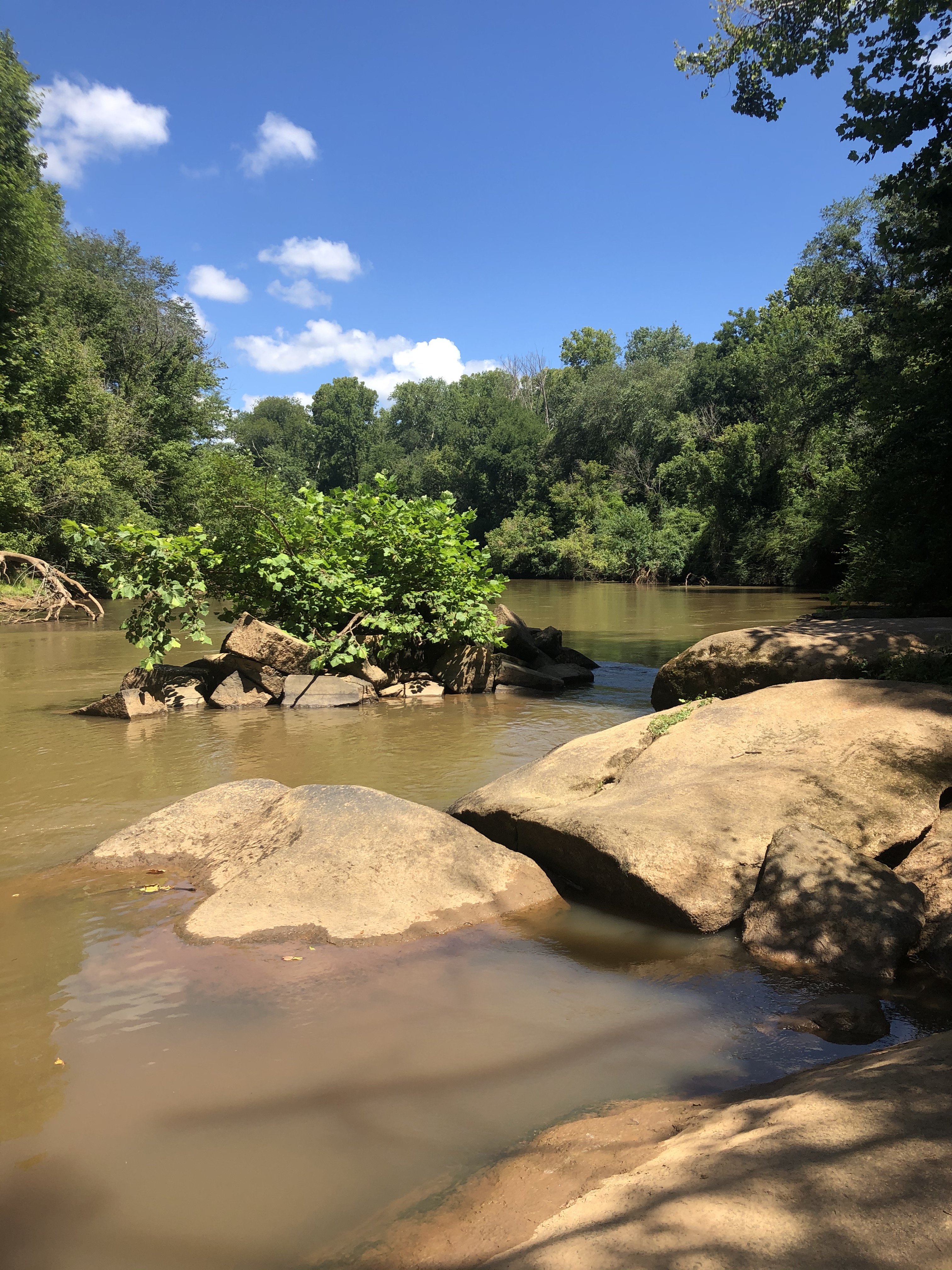
The water
The rocky shoals that powered a paper mill, a grist mill and a cotton factory.
Learn more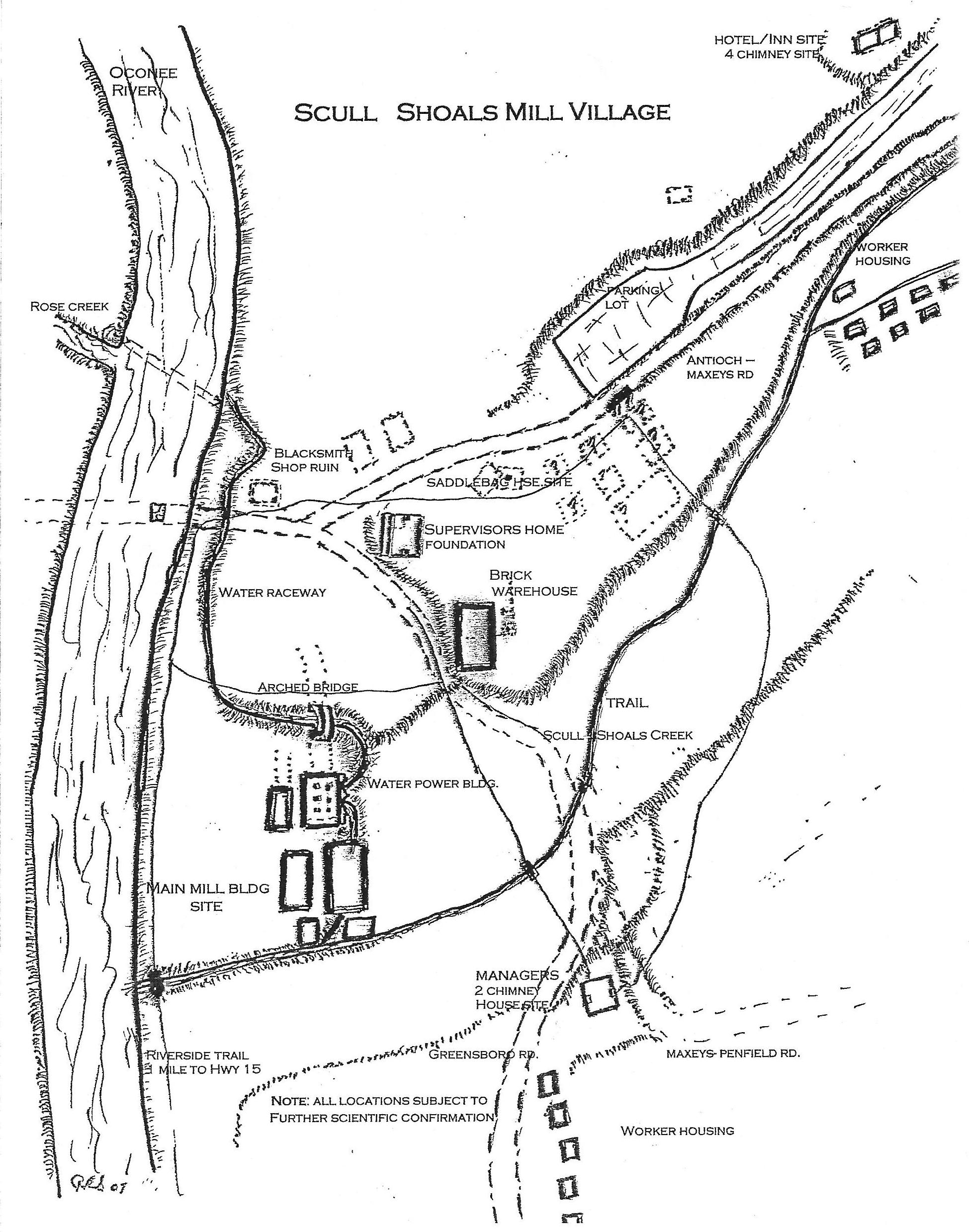
Site map
Foundations for the mills, worker housing, the boarding house and a supervisor’s home, all under the pines.
Learn more
Living history
Volunteers are replanting the medicinal herbs used by a famous 19th-century healer and his family.
Learn more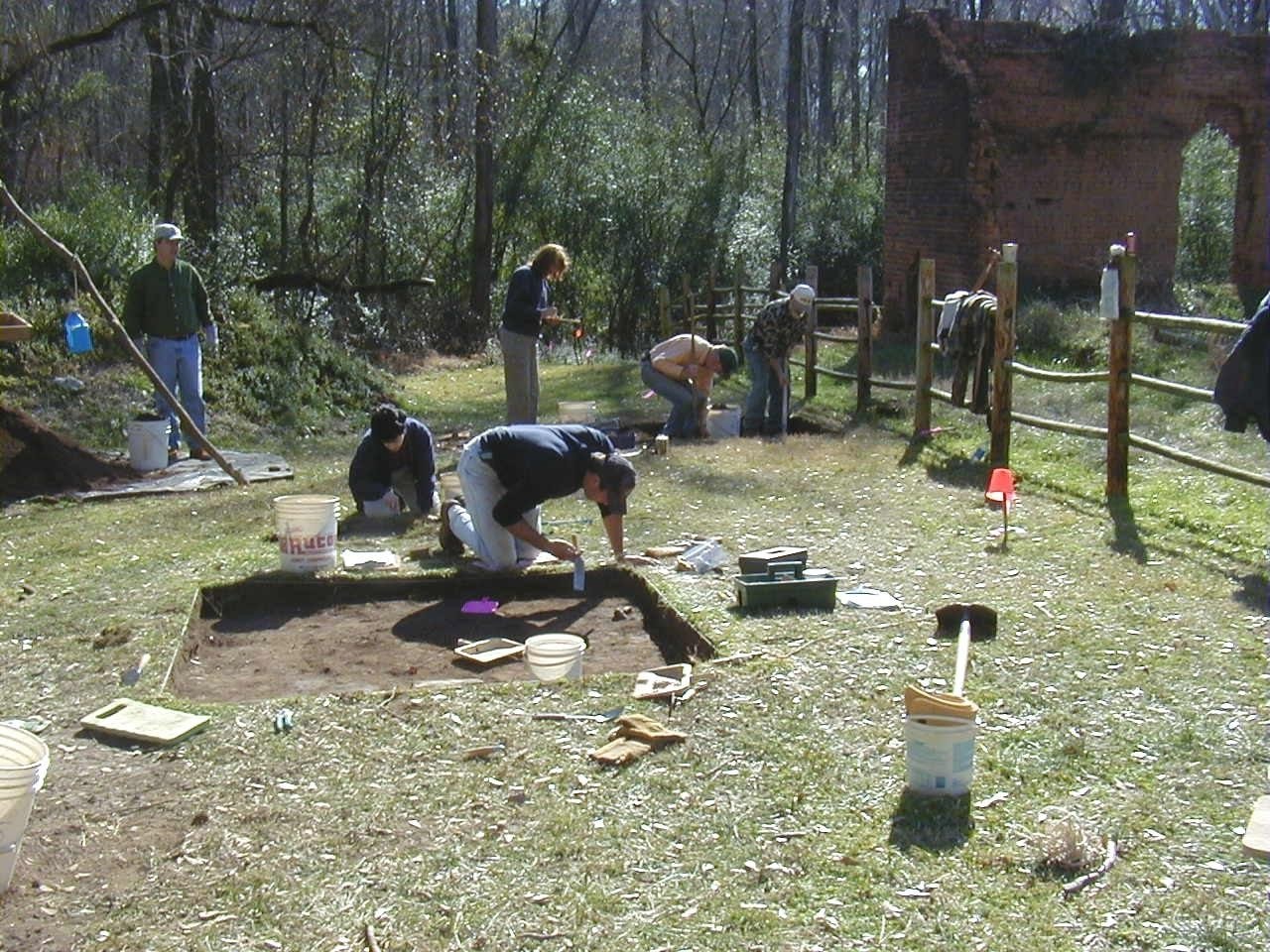
Field notes
Friends of Scull Shoals works alongside university researchers and Oconee National Forest archaeologists to answer questions the ruins cannot answer alone.
Oct 2020
FOSS teamed up with Georgia State University’s anthropology department and sponsored graduate researcher Joy Przybyla to scan for the old fort. The data turned up likely underground targets, but test pits with Forest Service archaeologists found no structural remains.
2023
Robert Skarda is coordinating a drone survey of 400 acres, building a detailed elevation map of the mill village without the trees, in partnership with Oconee National Forest archaeologists.
The book
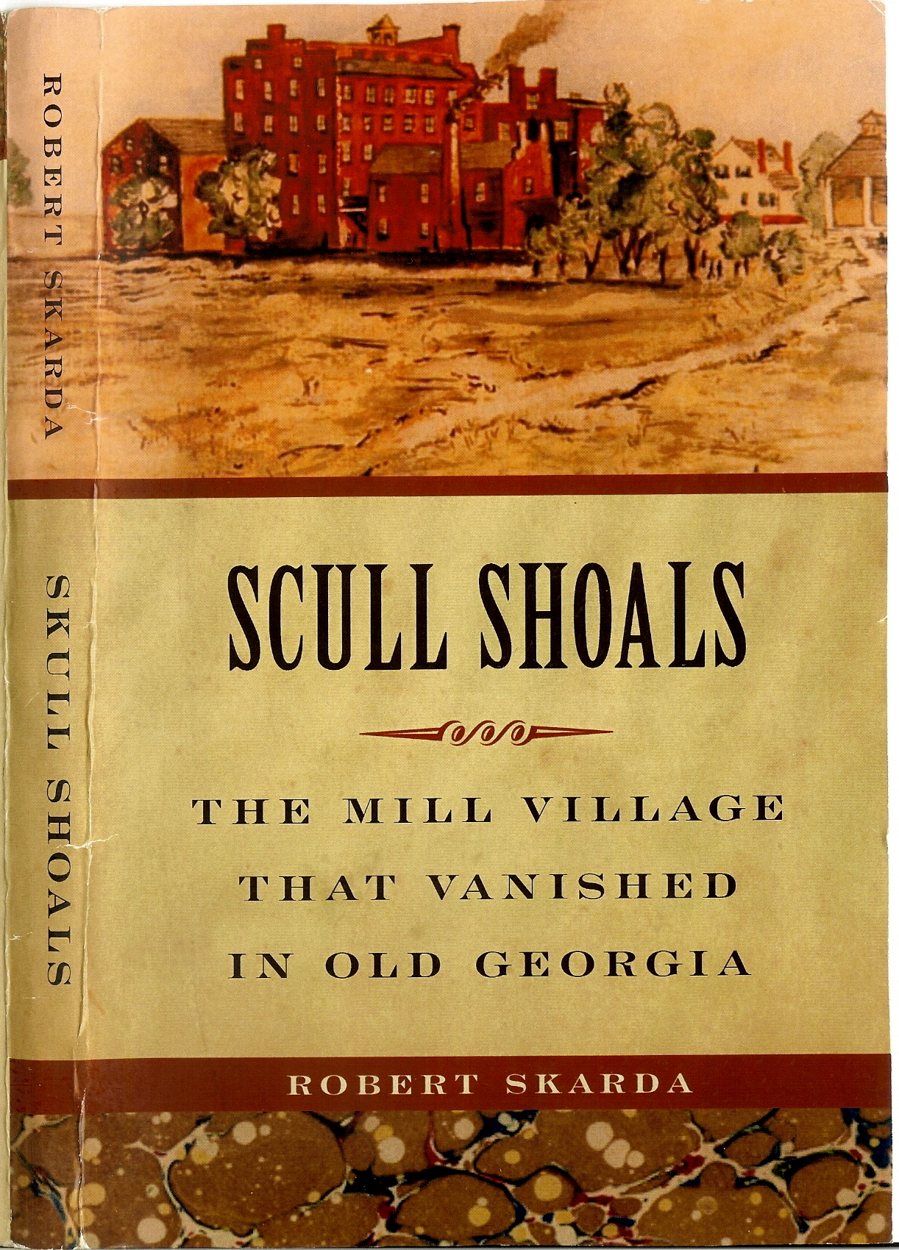
Scull Shoals: The Mill Village That Vanished in Old Georgia
Robert Skarda · Old Oconee Books, 2007
Bob Skarda, the Friends’ webmaster and a past president, wrote the book-length history of the village. It follows Scull Shoals from the frontier settlement and Georgia’s first water-powered paper mill, through the cotton mill years, to the brick ruins standing in the forest today.
Copies are available through the Friends. Ask about the book at the post office box, or look for it at a Georgia library or historical society.
ISBN 978-0-9844602-0-5
Plan your visit
The site sits inside the Oconee National Forest in Greene County, Georgia. It is free and open daily, with a short walk from the parking area to the warehouse ruins and river trail.
 A partner site of the Oconee National Forest, USDA Forest Service.

Get involved
Donations fund student tuition grants, archaeological exploration, site preservation and community education. Joining the Friends adds your name to the work, with memberships starting at $15 a year.
Prefer paper? Mail a check to Friends of Scull Shoals, P.O. Box 295, Greensboro, GA 30642.
Join the Friends
Add your name, and hear about tours, work days and new research.
Send a donation
Any amount supports grants, archaeology, trails and the herb garden.
Volunteer
Dig, plant, guide or help at events. Hands are always needed.
Friends of Scull Shoals is a 501(c)(3) non-profit. Contributions may be tax deductible.
“From wild frontier settlement to the first water-powered paper mill in Georgia, the shoals have always rewarded people who stopped to look.”
Friends of Scull Shoals · Est. 2000